Welcome

The issues of the teacher librarians and para-professionals in California School Libraries. Please share your concerns, feedback and questions.
Showing posts with label middle school. Show all posts

Friday, July 31, 2020

CALIBK12 Topic Roundup - Making Books Available To Students during Remote Learning

Question:

Hello!

Long time listener, first time caller. 

I work at at private school in San Mateo and the school is doing everything it can to have in person school at some point this year - perhaps even to start the school year - San Mateo County is not on the watch list as of this writing. 

The plans - as I understand it so far - includes having no students go to the library. We are a small pre-k through 8th grade school (about 250 students). 

I was thinking I would like to try to make library books available to the students in some capacity. I would love any ideas/suggestions/thoughts on how to do this, limits, frequency, etc. I will worry about getting books back and disinfecting them, but everything else is on the table. Please let me know your thoughts!

Thanks,
Jeff Paulson
Answers:
Hi all,

We all want to provide physical books to our communities who crave comfort - for the spirit, the eyes, and the brain during this pandemic. Many public libraries have created "curbside services." Perhaps school libraries will be able to offer the same? However, we all need to stay informed about the type of print materials handled. Here's what I've shared with our district's risk management team. 

Apparently, high gloss pages, present in magazines or children's board books will need to be quarantined for a longer period than other materials, up to 4 days. - REALM Test 2 Report

For most other library materials, After one day of attenuation, there was no recoverable virus (below LOD) for the hardback book cover, the paperback book cover, or the DVD case. By day three, all five tested material surfaces resulted in no recoverable virus.” - REALM Test 1 Report 

Regina Powers 
District Librarian 
Anaheim Union High School District


Hi Jeff, 

Our school district is doing distance learning however my plan for hybrid (when we get there) is to take a more 'embedded' approach where I visited classrooms (if possible) - maybe taking one cart full of books and have the students let me know what they like, make suggestions and then checking out items using the library's wireless laptop. Then they just have to return them into a box and they can sit for three or four days. 

We have Destiny LMS - my plan is to get this accessible via the school website so students can put a hold on books they like (perhaps up to five each) and I could deliver to the classroom after three days - perhaps in a plastic or paper bag. 

I was also recently in a small bookstore where they had 'Lucky Dip' book bags for romance - I was thinking this could possibly be done at the school - perhaps 3 books of a particular genre, write the barcode numbers on the side and then you just have to issue the items and hand over the bag. ?

Ruth Relf
Librarian 
Dexter Middle School
Whittier City School District 


Hello! 

Many HS TLs in our district are planning on allowing students to place holds on the library books they’d like. From there, we will have pick up hours each day. HTH!

Connie Joyce

Join in the conversation on CALIBK12!

What is CALIBK12?
CALIB K12 was originally a ListServ Moderated through San Jose State University. The original owner and creator was  Peter Milbury in 1993.  Here is the original description and purpose: 

"This is a discussion group for California library media teachers. Conversation on this list focuses on the topics of distinct interest to the California school library media community, including legislation affecting school library media centers, regional and statewide networking and resource-sharing, school library education and training programs, California Online Resources for Education (CORE), the California Technology Project and other services, organizations, resources or events that affect California school libraries and library media teachers. This discussion is open to all school library media teachers in California and people involved with the school library media field. It is not for general librarians or educators. But, the discussion can be used by library media people for many different things- to ask for input, share ideas and information, link programs that are geographically remote, make contacts, etc. This is a list for practitioners helping practitioners, sharing ideas, solving problems, telling each other about new publications and up-coming conferences, asking for assistance or information, and linking schools through their library media centers in California."

The List Serve closed on 12/31/2012, and was moved to a Google Group Moderated by Becky Johnston and Joan Mcall.  

For daily updates and if you best communicate by e-mail, then you should become a member of the CALIBK12 Google Discussion Group.  This is your CSLA hosted Professional Learning Network. I find this group especially helpful to get immediate responses to questions that are specific to the problems we deal with on a daily basis in California libraries.  If you have any questions or problems you want to ask the “great brain” or the “hive mind,” do this now!

Click here to join Calibk12, the discussion forum for all things related to California school libraries.  I recommend you join with your personal e-mail, as you may end up changing job locations throughout your library career.  

Once you've joined, you can post to the Calibk12 email list by sending an email to calibk12@googlegroups.com.

Make sure you adjust your settings so you get notified when something is posted:
  • My Settings
  • Membership and email settings
  • Email delivery preference (choose 1):
  • Don't send email updates
  • Send daily summaries
  • Send combined updates (25 messages per email)
  • Notify me for every new message (about 1 per day) *** I recommend this one!
Posting Protocol can be found at:  http://csla.net/calibk12-listserv/ 
To unsubscribe from Calibk12, email calibk12+unsubscribe@googlegroups.com.

This post was compiled by:


Heather Gruenthal, CSLA Historian
@hgruenthal on Twitter


Monday, October 3, 2016

Picture Books in Elementary and Middle Schools

Nancy Cussary TL Francisco Middle School SFUSD

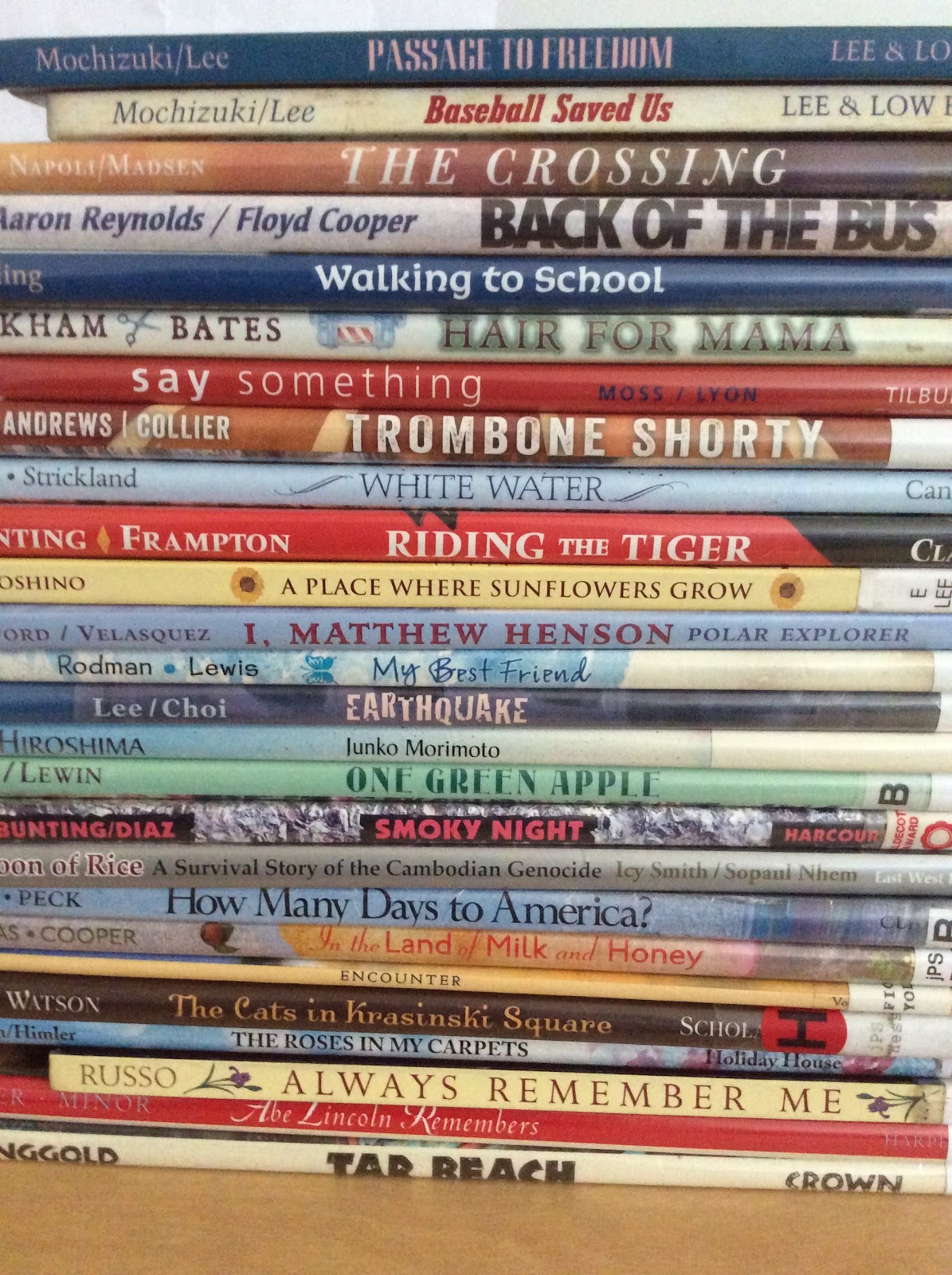
Picture books are very useful in a middle school library. One way we recently used them was to further teach the elements of a story. Using a range of picture books that were personal narratives, representing characters of different cultures and having text of different complexities, students chose a book and read alone or in pairs. They completed a brief note sheet describing the story elements - narrator, characters, plot, conflict, what the student and the characters learned, and how the pictures informed the story.

If you look at the titles in the image, you’ll notice that many can also be used to address historical eras.


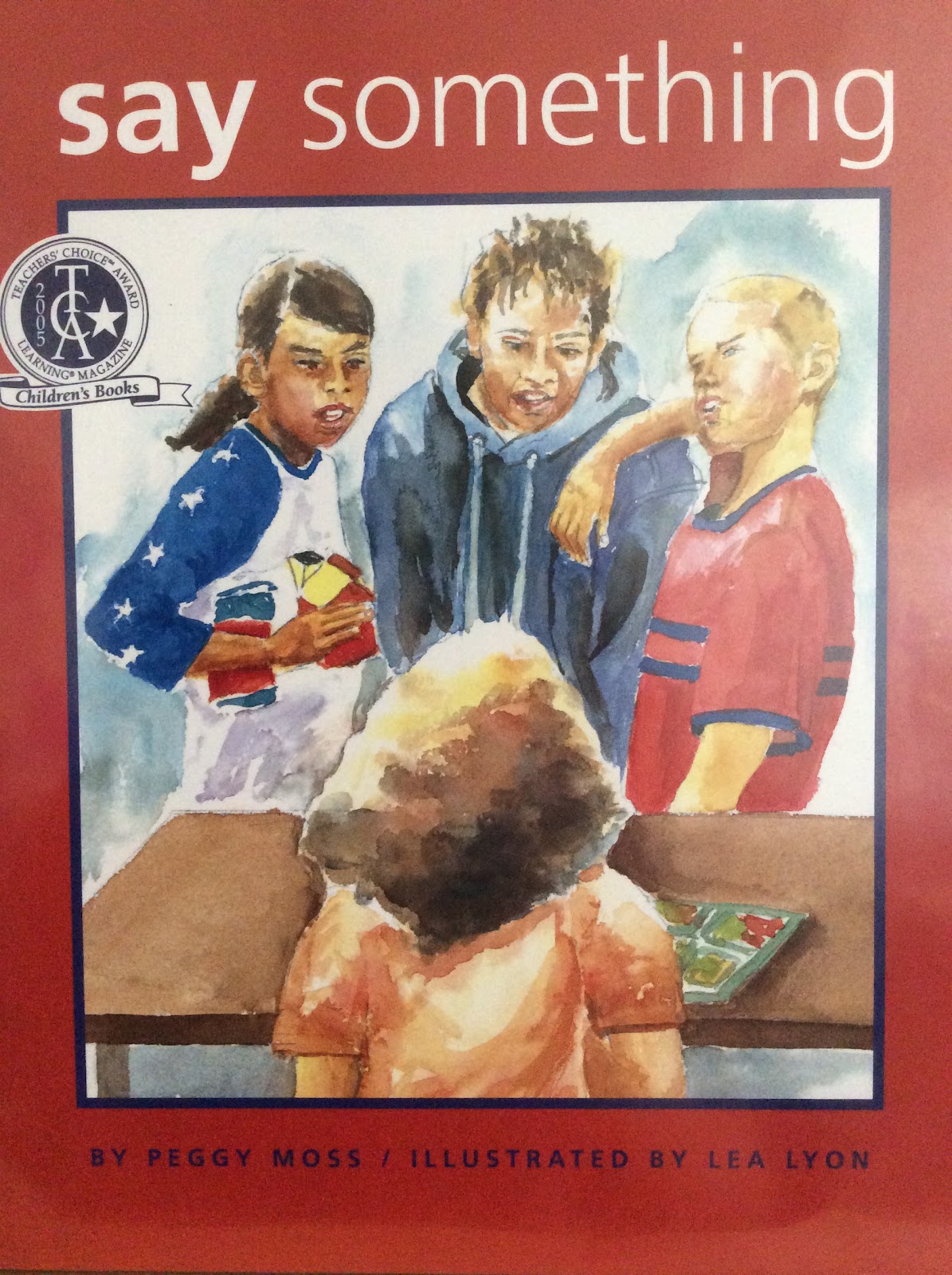
One teacher had her classes read one book and complete the activity together. We used the book Say Something by Peggy Moss because the story takes place in a middle school, is a narrative that is meaningful to students, has characters of different ethnicities, and is accessible across different learning abilities.


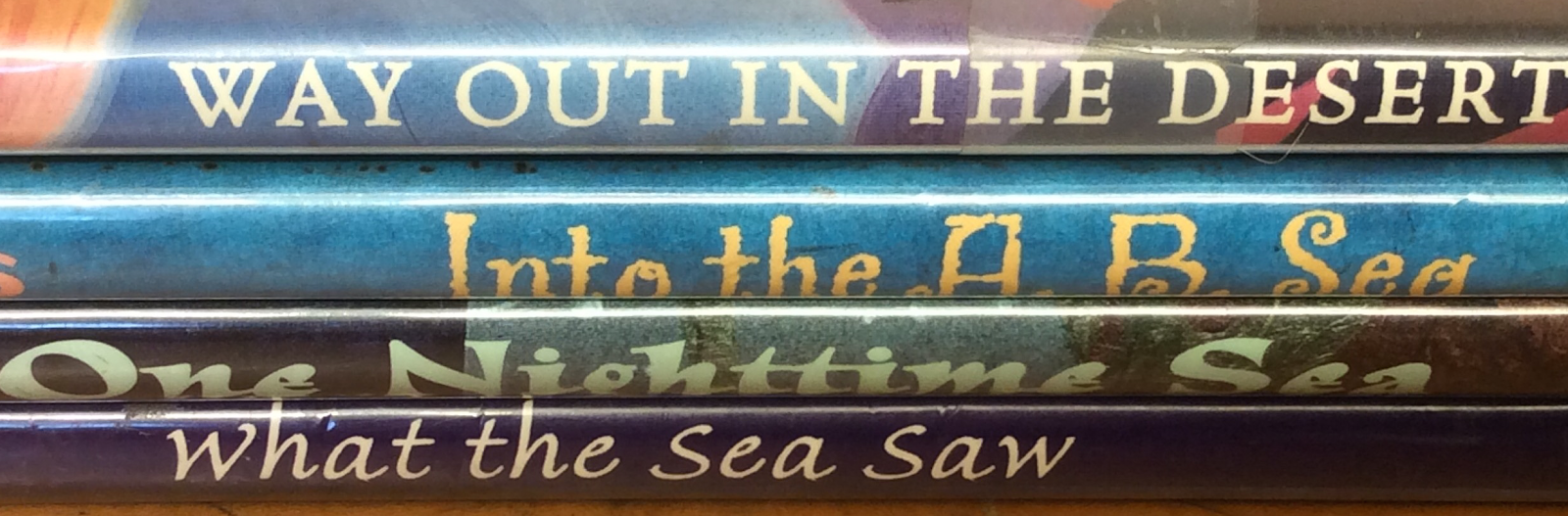
Another activity involving picture books was to use them in a science project on biomes.  Students were asked to create fictional picture books that took place in one biome.  They needed to include information about the environment and different animals and plants found in that biome.  The professionally published picture books served as mentor texts, or examples, for the students.


Lisa Bishop TL Aptos Middle School SFUSD
Because I spent most of my teaching career as a 4th/5th grade ELL/Bilingual teacher, Picture Books have been ESSENTIAL to my teaching and to my students “getting it”. I LOVE picture books! The science class I took for my teaching credential program employed a Bay Area 3rd grade teacher who taught us about how she educated herself on unfamiliar science concepts by beginning with children’s picture books and then worked her way up to the college level concepts and vocabulary. I thought that was such great advice. When you don’t know something about a complicated topic, start with a picture book! That is what I do now and teach my students to do as well. Go to Picture Books. 

 IMG_2166.jpg
Currently I’m a middle school Teacher Librarian at a large urban school for 6th-8th graders and many of my students are learning English as a second language and picture books can help a student use visual cues to understand complicated social, political, scientific and historical issues better than dense text on a page without incredible artwork.

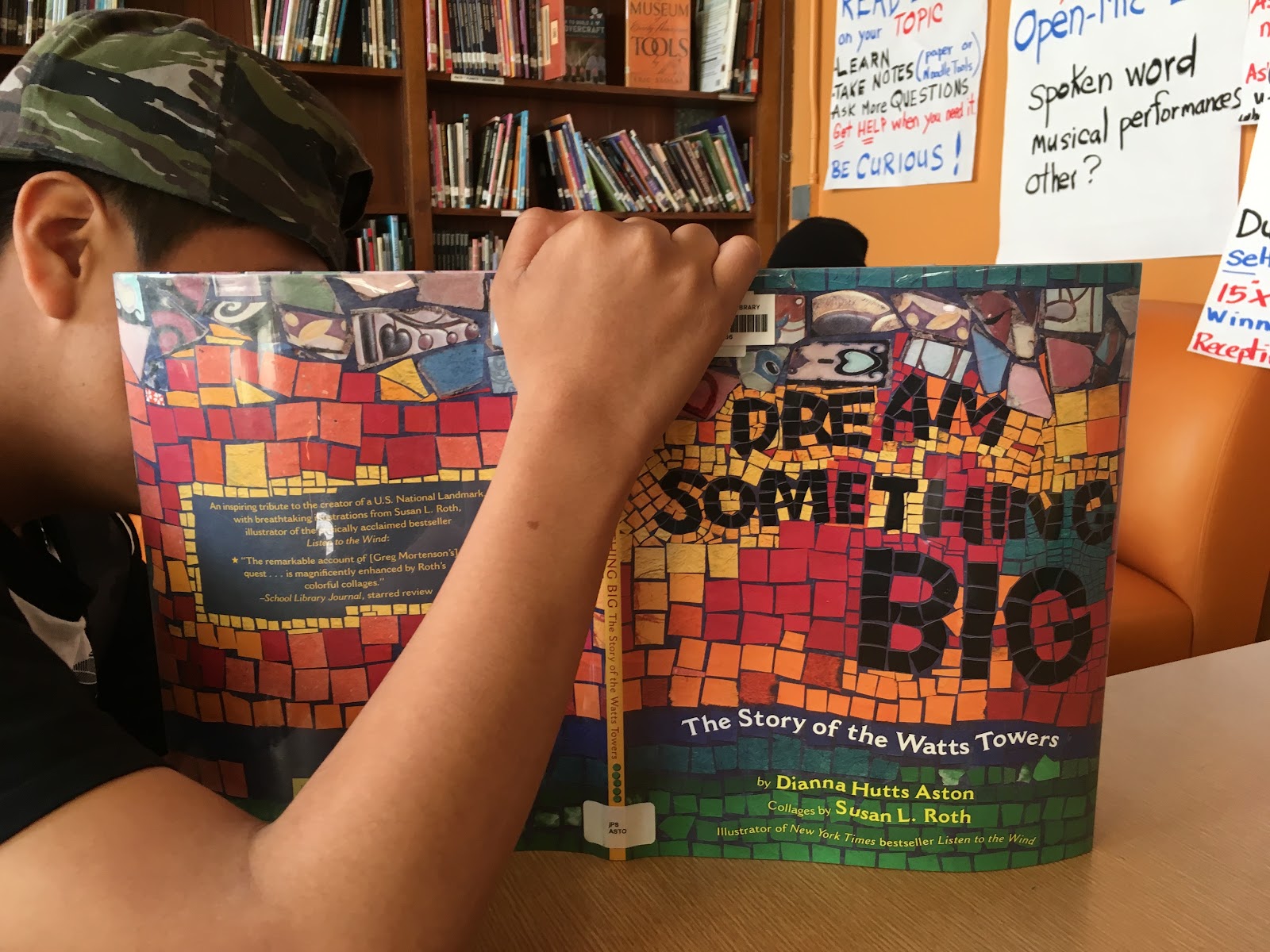
Last year a 7th grade ELD class participated in World Read Aloud Day or WRAD. I did a 5 minute introduction to WRAD and a quick book talk of the stack of picture books I had on the tables.  Students paired up and chose a picture book that they were interested in reading aloud to another student. The students spread out all over the library to read aloud to each other. The collaborating teacher and I deemed it a SUCCESS! The students clearly loved the opportunity to read aloud to each other and learn about interesting historical events and the people in those events.

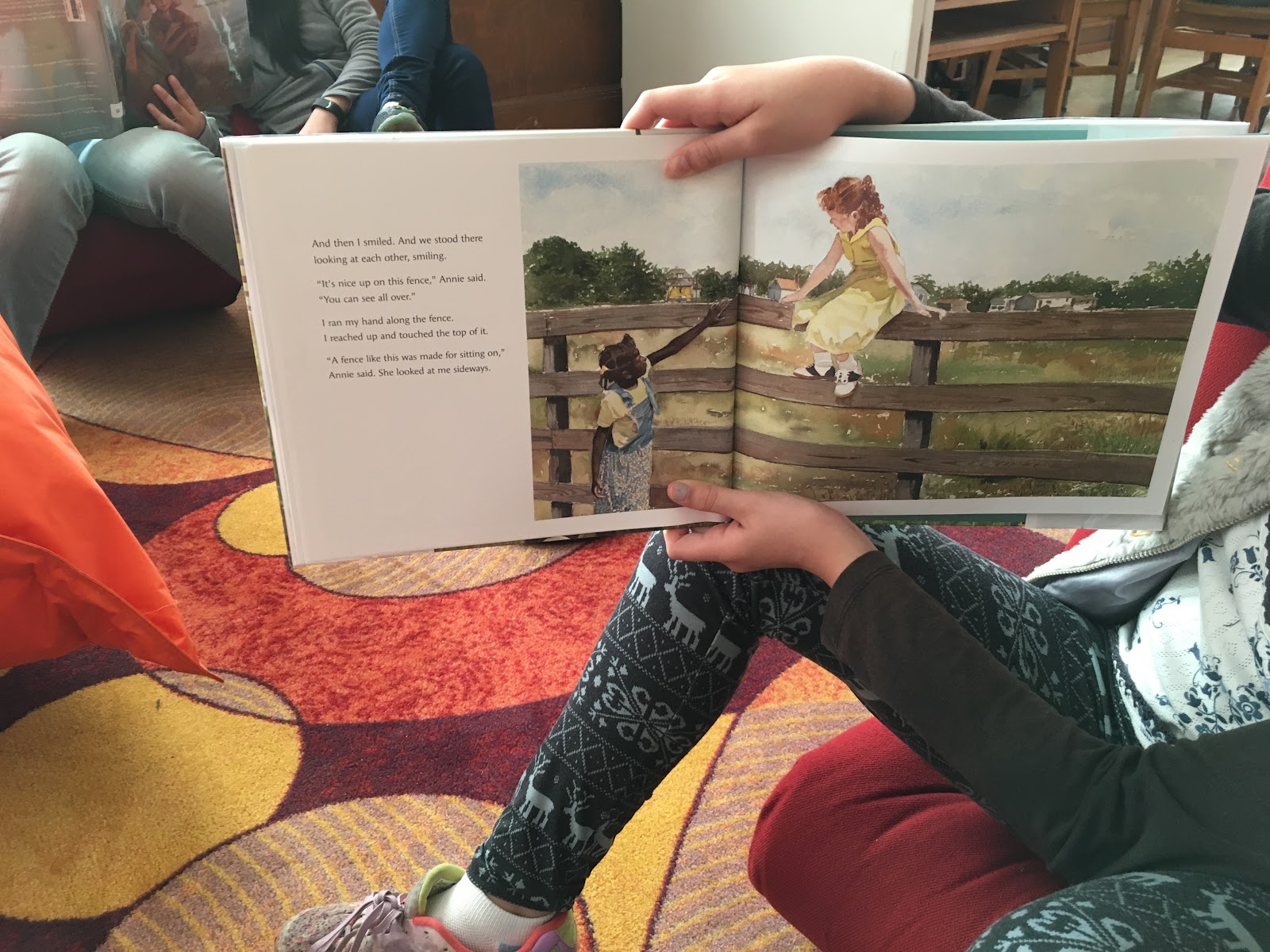
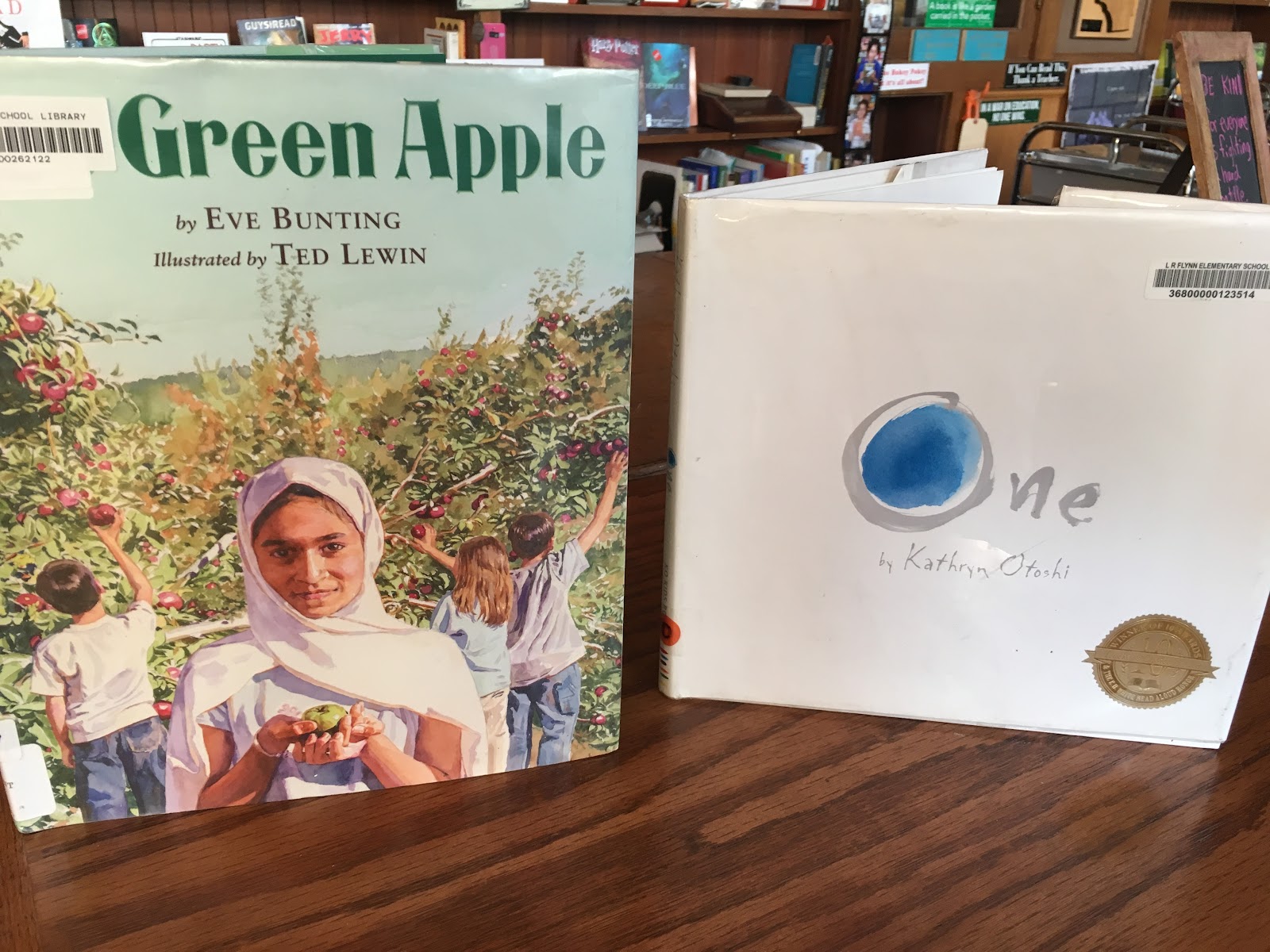
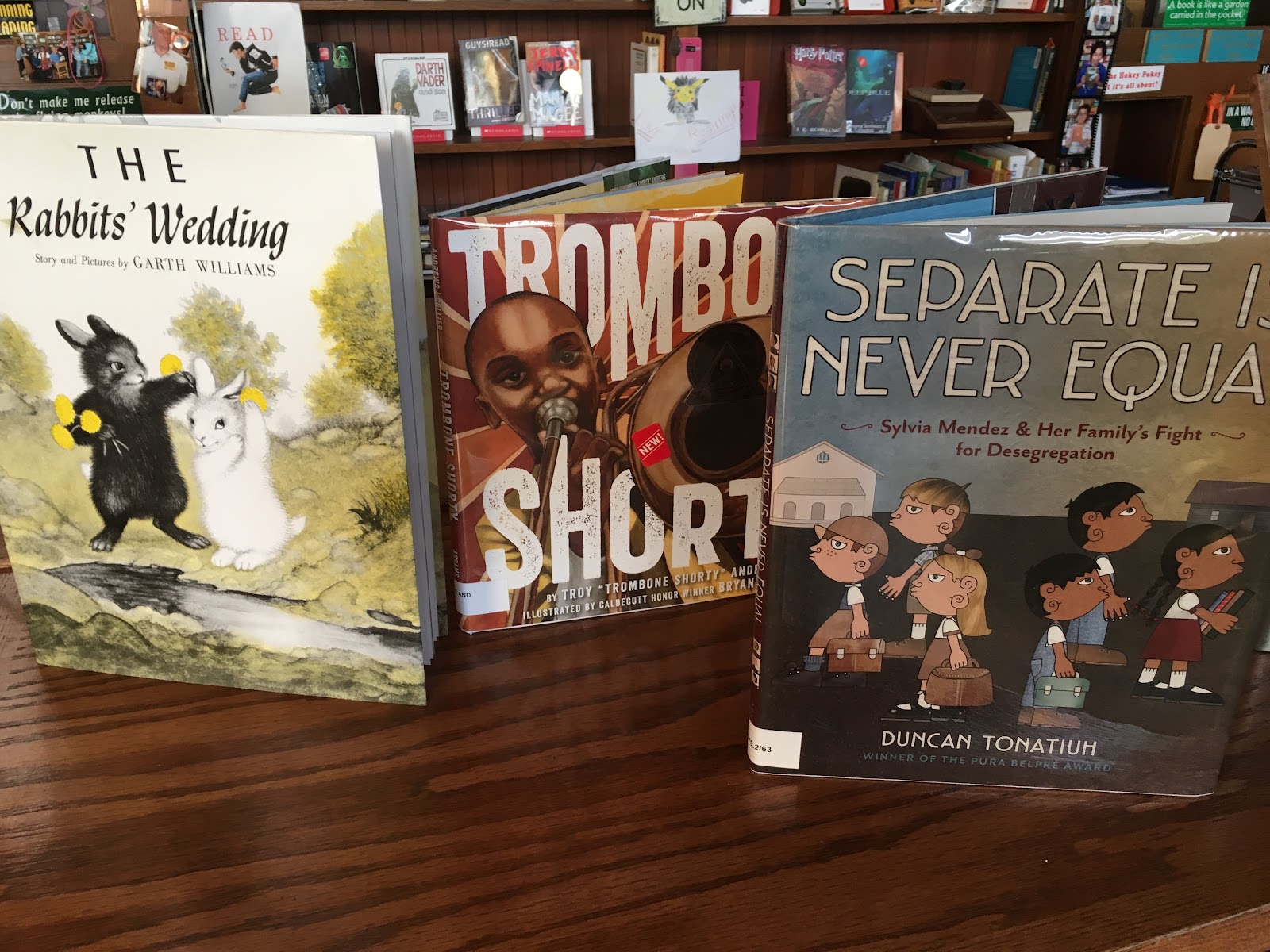
For our STEP UP program this summer, we brought our incoming 6th graders into the library and I read aloud two books to them. Kathryn Otoshi’s One and Todd Parr’s  It’s OK to be Different. As they get ready to come to a large middle school I wanted to have a conversation with them about bullying and about the importance to be able to be themselves and not be pressured to follow other people in middle school when it doesn’t make you feel good. During the middle of the year I read Byrd Baylor’s The Table Where Rich People Sit. This book is so beautifully written and brings the message that you don’t need to have a lot of money to be RICH! I often bring picture books like Jacqueline Woodson’s The Other Side adult pressures to keep children separated, Eve Bunting’s One Green Apple about being a young muslim immigrant, Yoshiko Uchida’s The Bracelet friendship in the times of Japanese Internment, and, The Case for Loving; The Fight for Interracial Marriage to student’s attention during different times of the school year. During Banned Books Week, I introduced The Rabbit's Wedding by Garth Williams and  And Tango Makes Three as just a few of the picture books that have been challenged by the public to be taken off of our shelves.IMG_2159.jpgIMG_5245.jpgIMG_5243.jpg

Let Picture Books for Older Readers grow in your library!


Nancy Lucero  TL Sutro Elementary School

Picture books are a main staple in my elementary school. From preschool to 5th Grade, novice to proficient readers, my students thrive on picture books. Picture books support ALL readers. Ninety-five percent of our students are English language learners. The illustrations in picture books not only help a child’s comprehension or support developing their new language but develops a sense of inclusion.

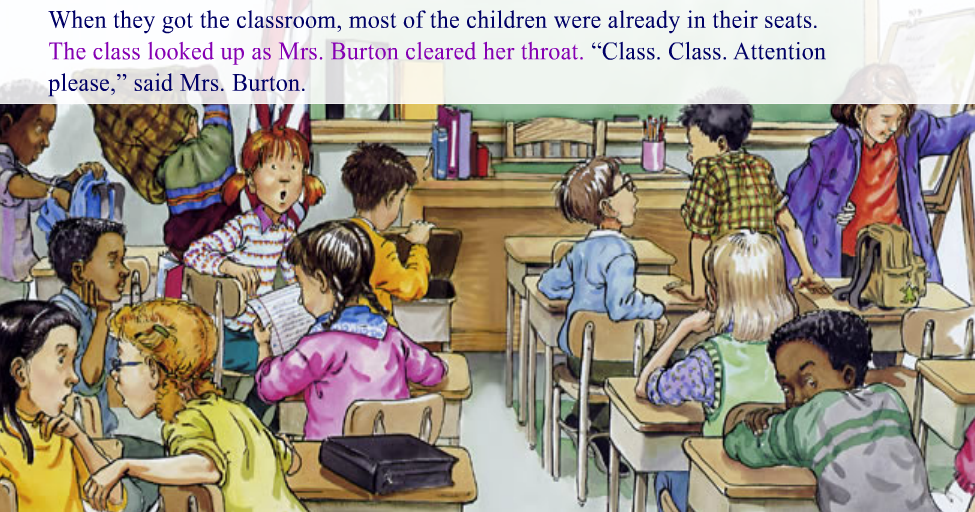
Just recently I introduced the story First Day Jitters by Julie Danneberg. Students were asked to look closely at what was going on in the pictures and share with a buddy. Before too long, students were creating noises taking place in this particular classroom; students whispered,  used loud voices, made bells ring and chairs scraping the floor. Another student mentioned one child sitting all alone and feeling really angry. As in this case, visuals are better to support a child’s understanding of the “whole picture.”


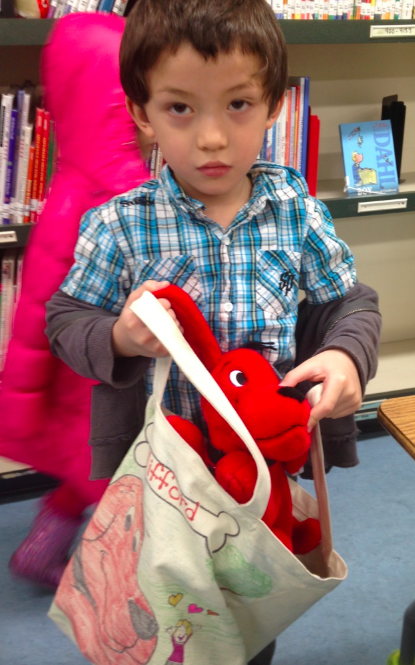
In our library, students can check out a book in a bag with the character of the story. Be it Clifford, Pete the Cat, or Fly Guy, they serve as reading buddies straight out of the book. Often times, I will present a story and provide an activity that allows the students to experience what is going on in the story such as constructing something and then transforming it into something else as in Changes, Changes.  One of the students’ favorite activities is having our own tea party after reading Miss Spider's Tea Party How do I support readers at home as well? I have a treasure box where students can take a book or two to add to their home library. 

Pictures and photos are truly worth a thousand words!