CSLA was pleased to partner with CUE at the recent CUE Annual Conference on a full-day summit within the conference. The March 21 summit focused on the theme of Information Literacy. Speakers included guest keynoter Kathy Schrock, and three CSLA members, Deborah Stanley, Janice Gilmore-See, and Glen Warren.
This was the second year that CSLA presented a summit during the CUE Conference. In 2014, CSLA’s summit theme was digital citizenship. Both years, the summits offered conference attendees the opportunity to learn about important topics on themes that are key areas of expertise of teacher librarians. Here are some of the highlights from this year’s summit:
Kathy Schrock on Information Literacy as The Common Thread
Kathy Schrock began her professional career as a school librarian before moving to the field of educational technology. She is nationally-recognized expert on educational technology and a popular speaker at national conferences. Her keynote for the CSLA Summit was on the topic, “The Common Thread: Weaving Information Literacy Skills to Engage Learners.”
Kathy Schrock opened her presentation with an excellent video from Semole State Library defining information literacy as the ability to identify, find, evaluate, apply, and acknowledge information, both in the academic setting and the real world. She then built her presentation around an image from the SHIFT Disruptive eLearning blog that highlights 10 things learners pay attention to: questions, contrast, problem-solving, comparisons, brevity, emotions, stories, lists, visuals, and controversy. For each of these attention-getting devices, she shared several examples of how they can be used to weave information literacy into content-area instruction in a way that will engage students, help them retain information, and process it into personal knowledge.
For example, as part of her discussion of problem-solving, she shared the importance of teaching students why catchy titles are important and how to problem-solve creating such titles. In another example, under brevity, she shared the value of having students develop infographics to demonstrate understanding in visually appealing and concise ways. Along with infographics, students need visuals, and she shared what Creative Commons licensing is and why we should be using Creative Commons-licensed materials. During her discussion of stories as a device, she shared that storytelling activates parts of the brain that cause students to retain content and make personal connections, so creating stories is valuable tool for student engagement and retention.
To access all the resources she shared beyond these few examples, visit her resource page.
Kathy Schrock’s session made it clear that teaching information literacy skills is vital for our students, and that librarians and classroom teachers can work together to weave them into content areas.
Deborah Stanley on Research Teaching
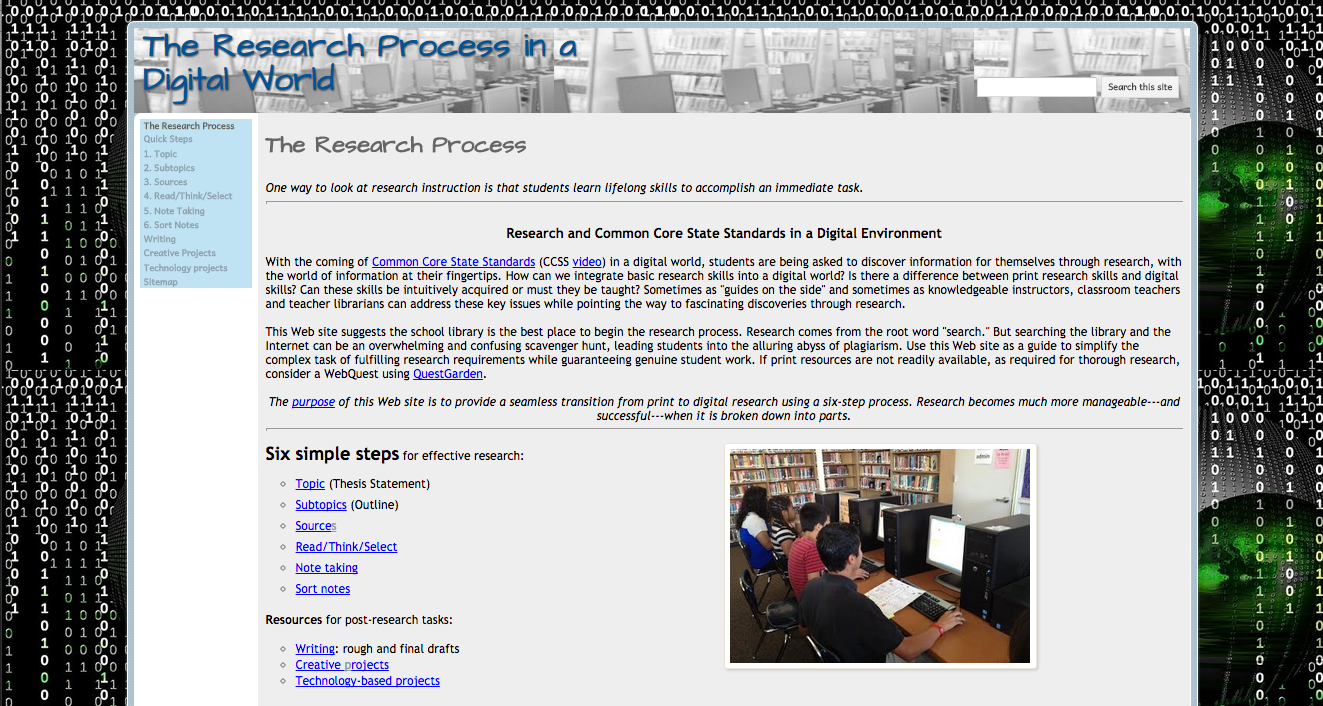
The second session of the day was Deborah Stanley’s on “The Importance of Research Teaching in a Common Core Digital World.” Deborah, a Past CSLA VP of Organization, is the author of three books on research, Practical Steps to the Research Process for High School, Practical Steps to the Research Process for Middle School, and Practical Steps to the Research Process for Elementary School, and through her books and presentations over the years, she has guided many teacher librarians in their teaching of the research process. For the summit presentation, she created a brand new website, The Research Process in a Digital World, which brings the research teaching process up to date with the availability of digital tools for each of the research steps, which include defining the topic; defining subtopics; selecting and using sources; reading, thinking, and selecting information; note taking; sorting notes; and writing. For each step, she shared techniques and digital tools. Her site provides a gold mine of information and tools for teaching research. As a bonus, the site has links to digital tools to help with writing, creating presentations, and more, which could be used as part of research or other project-based learning activities.
Some of the important messages from Deborah Stanley’s session were that research, like writing, is a process. It takes time to teach and learn. It is also a process that must be scaffolded from grade to grade. Deborah urged us to build choices into the research process, which allows for differentiation and accessibility for all students. She also emphasized that students need to understand why they are doing the research. Unless they buy into the why, they have no purpose for learning. We need to make sure they buy into the why. Another take away was the value of good note taking: when information changes forms - from reading, to notes, to the students’ paper -, learning occurs. When students simply cut and paste, they learn nothing because the material never changes form or gets processed in their brains.
Janice Gilmore-See on Depth of Knowledge
Our next presenter was Janice Gilmore-See, CSLA’s Immediate Past President and author of the book Simply Indispensable. In her presentation on “Getting to DOK 4: Depth of Knowledge and Information Literacy,” she shared how Depth of Knowledge (DOK), in conjunction with information literacy, can serve to raise and promote rigor in our curriculum and classrooms. Greater rigor, she explained, is important to better prepare students to be college and career ready.
Here is the visual Janice used to explain levels of depth of knowledge:
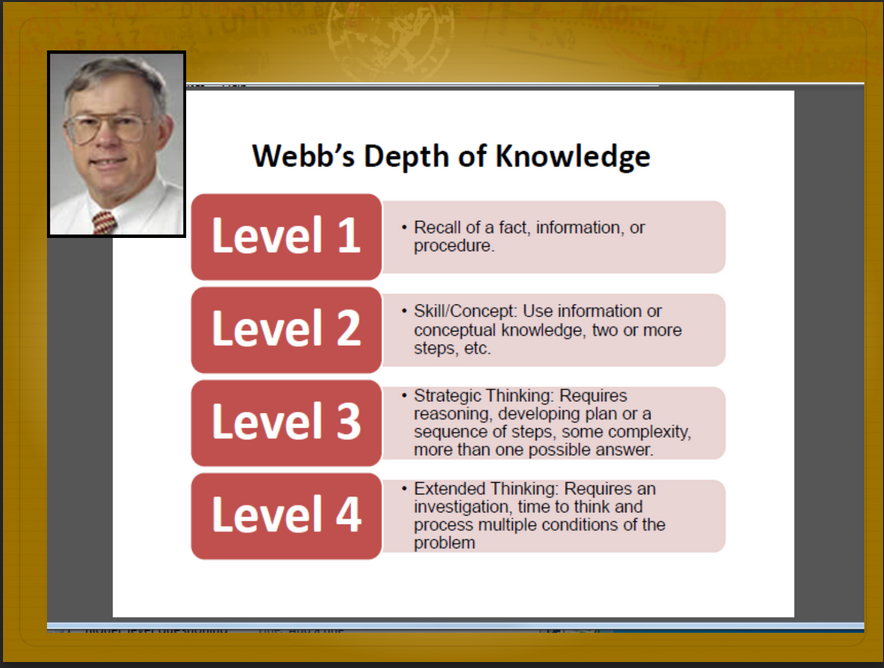
Here is one of a number of examples she gave of how activities can be moved to higher DOK levels:
DOK1: Identify the Democratic and Republican party platforms by searching their official websites.
DOK2: Explain four issues where the Democratic and Republican candidates disagreed identified by viewing a series of debates.
DOK3: Verify that candidates espoused the same views as the official Democratic and/or Republican platforms expressed in a series of debates.
DOK4: Create your own party and party platform. Include three to five issues and be prepared to present and debate those issues.
She explained that DOK3 and 4 activities usually take more time and it is not necessary to teach everything at these levels. However, all students need some DOK3 and 4 activities, not just the high end students. Janice shared a wide range of ideas for higher level activities. These are available in her presentation slides.
Glen Warren on the Uncommon Core
The final Information Literacy Summit session of the day was Glen Warren’s on “The Uncommon Core: Advancing Student Centered Learning through Gaming and Information Literacy.” Glen is current CSLA VP of Government Relations. He was Orange County Teacher of the Year and a California Teacher of the Year Semi-Finalist in 2014.
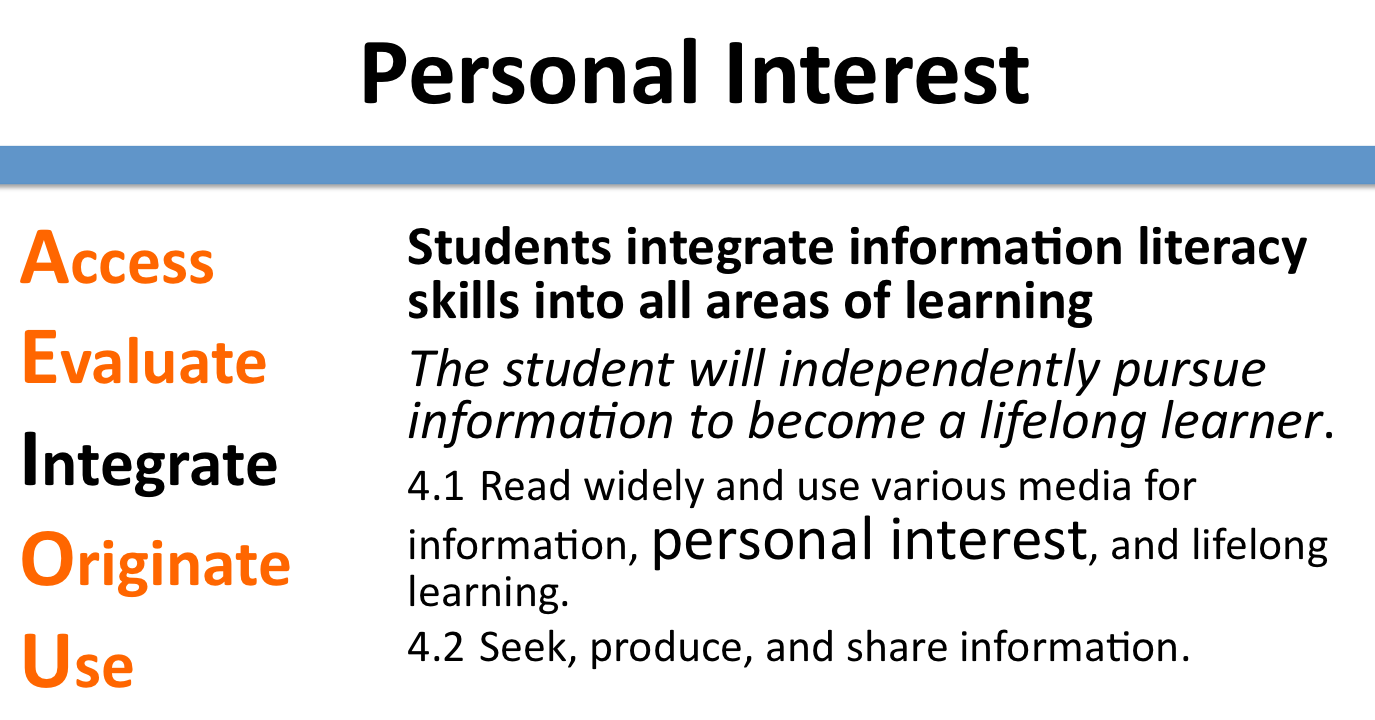
Glen shared that way too much time in school is devoted to content-driven teaching, in which we send students the message that learning is all about required content and that their personal interests don’t matter. We need, he explained, to begin adopting a process-driven model, which allows students to explore their personal interests and to ask, and answer, their own questions. “When we connect kids with what they love,” he shared, “they become better learners.” In fact, the Model School Libraries for California Public Schools, which serve as a “how to” for implementing Common Core, highlight personal interest as part of integrating information, as he showed in this visual:
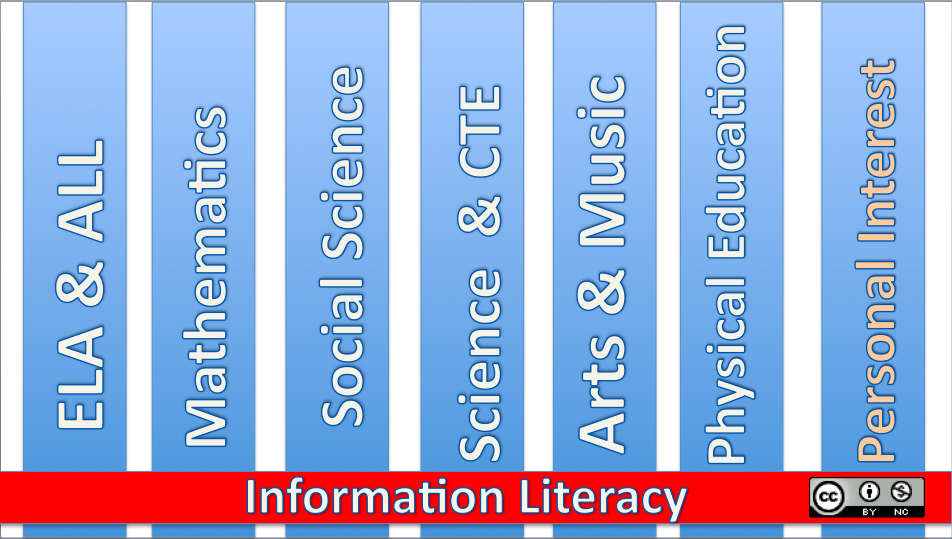
Information literacy serves as a cross-curricular anchor that ties together all the different disciplines as well as personal interest:
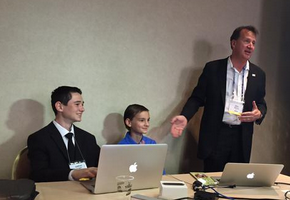
Glen had two of his students with him who shared how they were able to the work on their personal interest - using Minecraft to design a computer - by asking their own questions, doing research, and finding the solutions they needed.
For links to all the Information Literacy Summit materials, visit the CSLA website summit page: csla.net/ils
Jane Lofton and Pam Oehlman, both CSLA Past Presidents, served as coordinators for the summit.